
The little black dress
The colour black has historically been associated with mourning and death, and it still is to some extent. However, in 1926, Gabrielle “Coco” Chanel created a new perspective on black.
The little black dress was introduced to the world: a knee-length black dress that radiated both simplicity and elegance. Black was now to be celebrated for its versatility. It was meant to be worn anywhere and at any time.

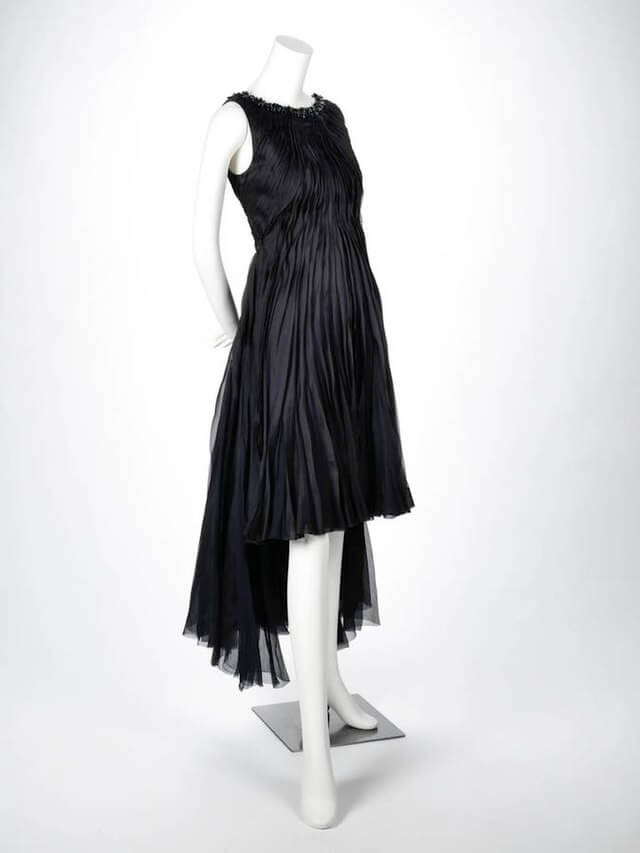
Chanel’s vision for this dress was a versatile garment, suitable for both formal occasions and everyday wear. Above are more recent interpretations of the little black dress: one from 1958, designed by Coco Chanel, and one from 2009, designed by Karl Lagerfeld. The original 1926 design featured long sleeves and a round neckline. The dress was simple, loose-fitting, and flat—characteristic of Chanel’s designs, as she opposed conventional and uncomfortable women’s fashion. Notably, the dress lacked embellishments and details such as buttons and patterns, which could have affected its timeless relevance.
The dress’s minimal design created a canvas for creativity, allowing it to be accessorised in ways that changed the perception of the garment.
It was not just a dress but a timeless concept for all women. This concept has been interpreted and produced in many different ways by designers over time. Many fashion houses have offered their own take on the little black dress, each with their own artistic signature.
With this idea, Chanel immortalised herself and created a must-have for every woman’s wardrobe.