
Selvedge denim
Selvedge (European) or selvage (American) is the prestigious variant of denim. Selvedge is made from 100% cotton and is generally considered to be high-quality denim. It has a more distinctive texture compared to non-selvedge denim. The name derives from the fact that selvedge fabric has finished edges along the sides of the fabric, which prevent fraying, whereas non-selvedge denim has cut edges that are prone to fraying.

The differences are due to the fact that selvedge and non-selvedge denim are produced on different types of looms.
Shuttle-loom
Selvedge is produced on a vintage shuttle loom. This type of loom uses a single weft thread throughout the entire fabric. As the weft travels in one direction and reaches the edge, it loops around the outermost warp thread and weaves back in the opposite direction. This looping is repeated throughout the process, resulting in a tightly woven, self-finished edge on both sides of the fabric.
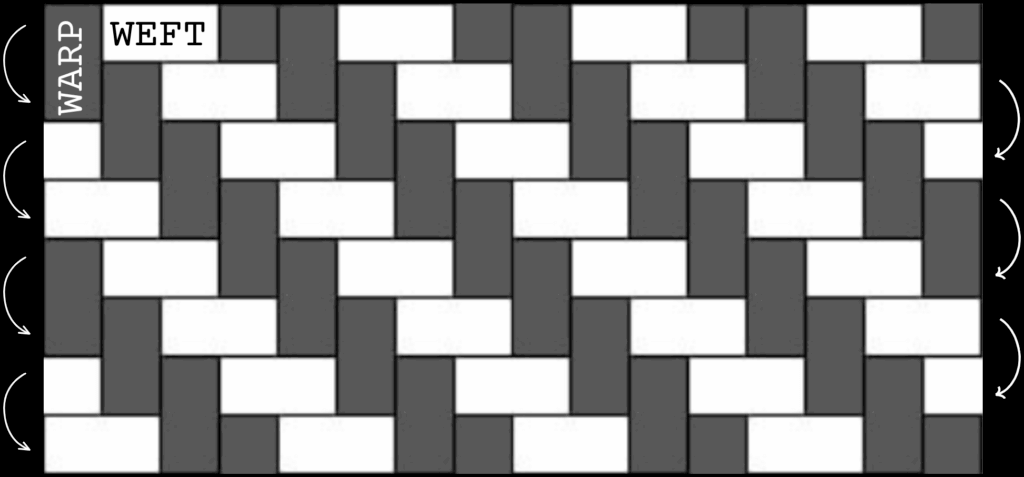
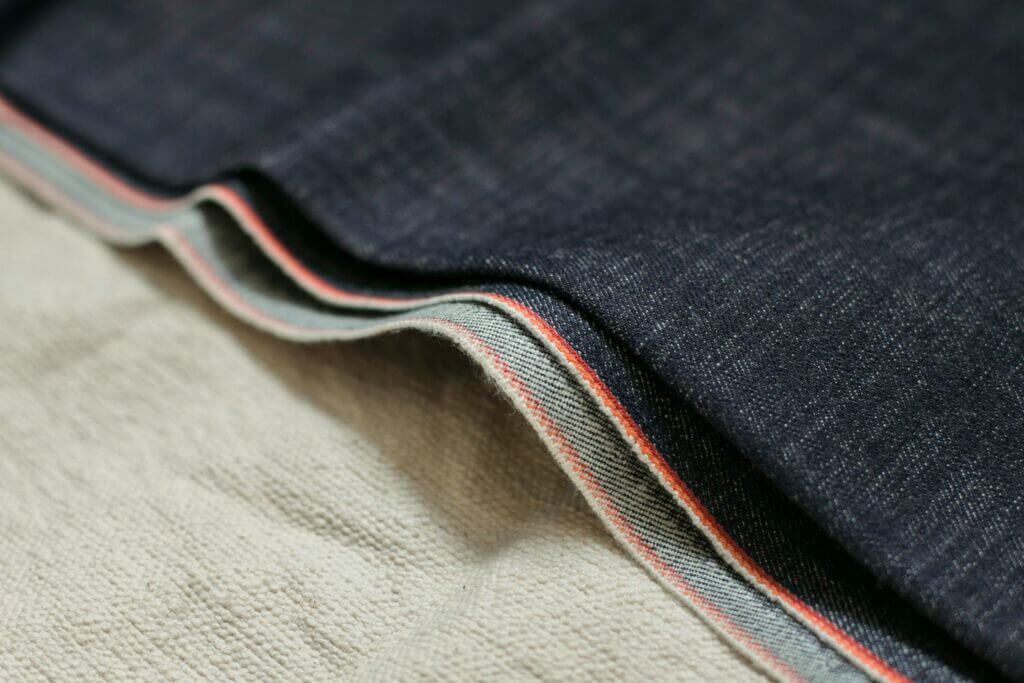
The shuttle loom can tolerate thick threads and slubs, which give the fabric a distinctive texture. However, this type of loom also requires a lot of maintenance. A shuttle loom can weave 100–200 weft picks per minute and produces a fabric that is 70–80 cm wide. Selvedge can be identified on the inside of trouser legs by the seams’ edges, which are either white or white with coloured stripes.
Projectile-loom
Non-selvedge is produced on a projectile loom. This type of loom uses a new weft thread for each pick, resulting in imperfect edges. The emphasis here is more on speed and volume.
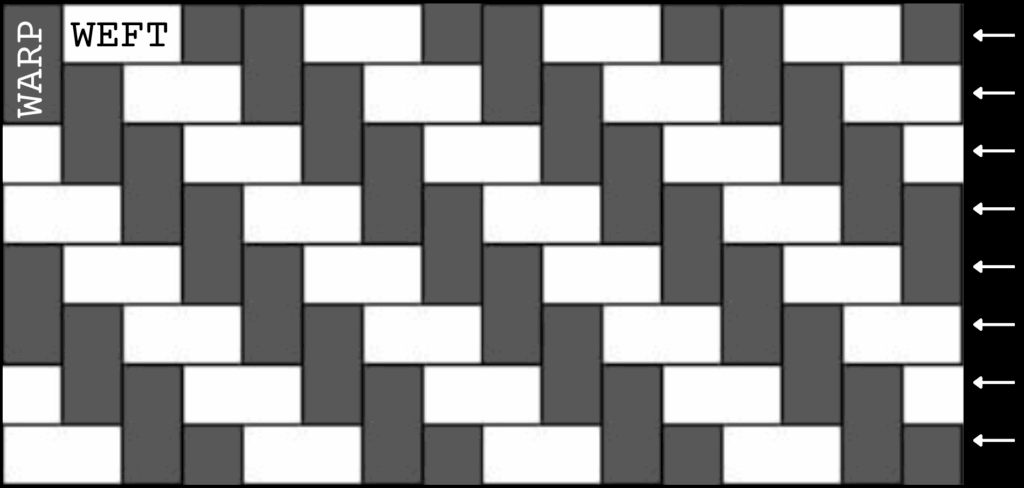
A projectile loom can weave 700–1000 weft picks per minute and produces fabric that is 140–160 cm wide. This means the projectile loom has a higher production capacity than the shuttle loom and requires less maintenance; consequently, non-selvedge denim has lower production costs than selvedge denim. For this reason, the majority of denim is produced on projectile looms and is therefore non-selvedge denim.
Raw Denim
Raw denim is untreated denim. Textile products are often pre-washed before being sold, but raw denim skips this process and is sold in its “raw” form. As a result, the fabric is stiff at first but softens over time. The colour will gradually fade where the fabric creases and folds, creating a pattern uniquely shaped by the wearer’s body. Raw denim is rarely washed to encourage this fading effect.