Modens stilarter og æstetikker
Fashion styles and aesthetics are related concepts, but they do not refer to the same thing.
A fashion style should be understood as an individual’s consistent way of dressing and expressing their identity through clothing. It is the entirety of the individual’s wardrobe that defines their personal fashion style.
A fashion aesthetic should be understood as a visual theme that is expressed through clothing. These themes are often inspired by subcultures or historical periods.
Streetwear
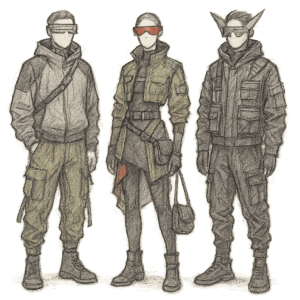
Streetwear emerged in the 1990s and draws inspiration from skate and hip-hop culture. The focus is on trendy, comfortable, and casual clothing suited for being active in the streets. Graphic tops, logos, baggy pants, and sneakers are central to streetwear. It was popularized by brands such as Supreme and Stüssy, as well as designer Virgil Abloh, who combined streetwear with luxury.
Street Style
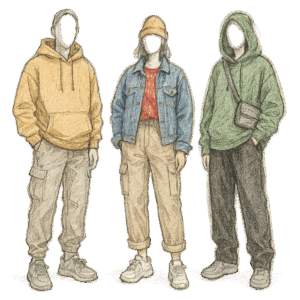
Street style describes the fashion that originates from everyday people in the streets. In other words, it is the fashion of the culture rather than the fashion of the industry. There is a strong focus on individualism and creating a personal expression through clothing. It is about being comfortable and confident in what you wear while showcasing your personal creativity. Street style also reflects the local culture and differs from city to city.
Sporty
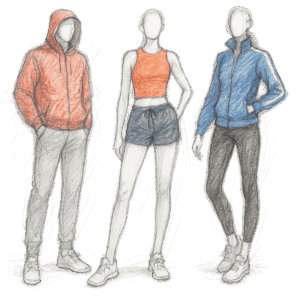
Sportswear is clothing originating from the world of sports. It is practical and comfortable, often made from stretchy and soft materials in vibrant colors. It consists of full tracksuits and sports gear, or components from the sports wardrobe combined with other clothing styles to indicate an “on-the-go” lifestyle.
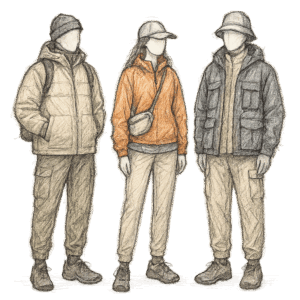
Gorpcore
Gorpcore is functional outdoor clothing used as fashion. GORP comes from the hiker and camper snack “Good Ol’ Raisins and Peanuts.” It features practical materials such as fleece, nylon, and Gore-Tex, along with a color palette inspired by the earthy tones of nature. Think Arc’teryx, The North Face, Patagonia, and Salomon. Typical garments include technical backpacks and pants, down jackets and vests, and hiking shoes.
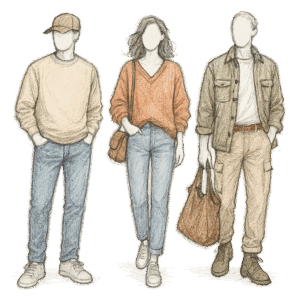
Casual
Casual wear is simple and relaxed clothing suited for everyday use. It is spontaneous, informal, and prioritizes comfort over style, with a focus on appearing presentable yet down-to-earth.
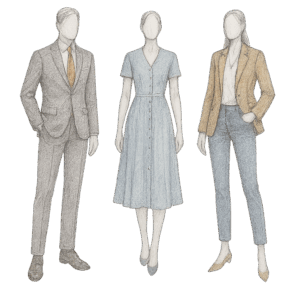
Classic
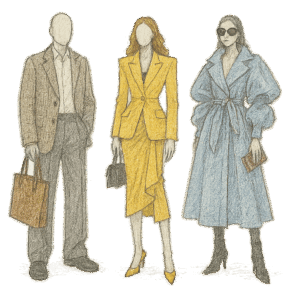
Classic wear is defined by timeless, essential clothing. It is simple yet well-fitted attire that can be easily mixed and matched. There is less focus on decorative details and more emphasis on quality. It is, in truth, “the basics.”
Chic
The chic style exudes elegance and confidence, consisting of simple yet luxurious clothing of high quality. Soft and comfortable materials such as silk and cashmere are used. The clothing is often form-fitting to highlight the wearer’s figure. It should appear as though minimal effort has been put into the look while radiating maximum sophistication.
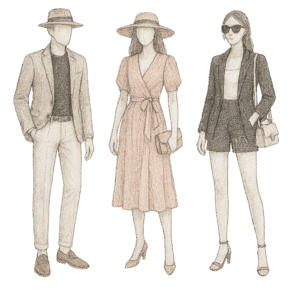
Old money
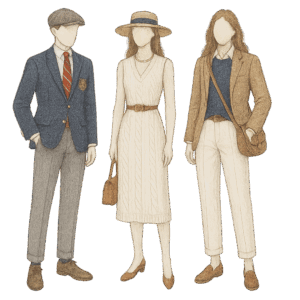
Old Money is inspired by the upper-class environment and inherited wealth. It values quality over quantity, with a focus on a sophisticated appearance. The clothing is made from exclusive fabrics such as silk, cashmere, and wool, in muted colors like beige, navy, white, and black. Typical garments include blazers, polos, loafers, pleated skirts, and tweed jackets.
Artsy
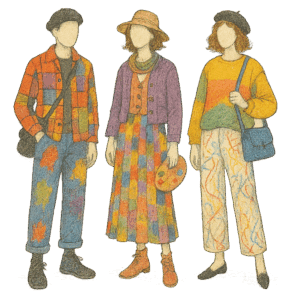
The artsy style is an unconventional way of dressing that centers on creativity and expressing one’s character through clothing. Flamboyant colors and shapes, a mix of materials, and personal styling create what is called “wearable art.” There is genuine artistic freedom, and it is all about having fun.
Bohemian/boho chic
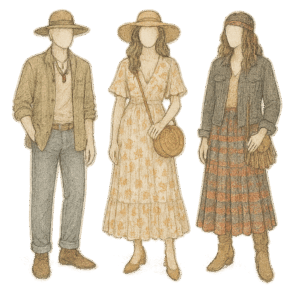
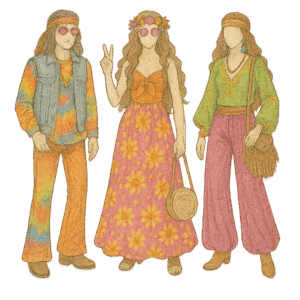
Bohemian, or boho chic, is a style that emphasizes being relaxed, free, and soulful. It features loose-fitting clothing in light, airy, and typically natural materials that allow freedom of movement. Floral and paisley patterns are combined with fabrics that flow with the wind. Bohemian style draws on nature’s colors, patterns, and motifs to appeal to the nature lover.
Country
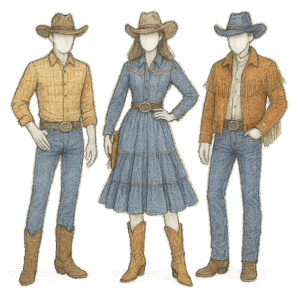
Country style is inspired by American rural life and Western culture, often with many cowboy references. It is durable clothing originally intended for hard work on the farm. Typical garments include cowboy boots, hats, denim jeans and jackets, leather belts with large buckles, and plaid shirts.
Hippie
Hippie style is inspired by the counterculture of the 1960s and 70s, with a focus on freedom, creativity, and youthfulness. Essential components include psychedelic colors, tie-dye, paisley patterns, and flowers. Typical garments include flared jeans, headbands, round glasses, leather sandals, and fringe jackets.
Romantic
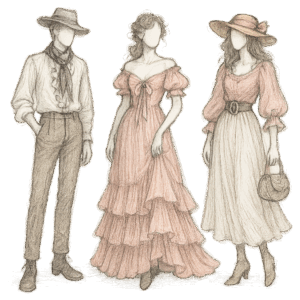
Romantic describes a feminine and dreamy style. It embraces a soft and graceful appearance, with light and sheer materials. Pastel colors, florals, flowing shapes, and an emphasis on the feminine figure and elegance are central to the style.
Kawaii
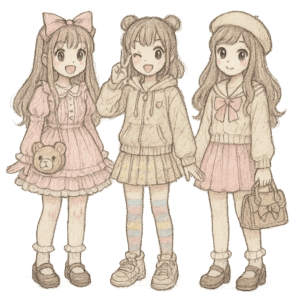
Kawaii means “cute” in Japanese and is inspired by cartoons. The focus is on youthfulness, playfulness, and exaggerated, sweet, and childlike details. It features pastel colors such as purple, pink, and blue, along with illustrations of animals, cartoon characters, and hearts. Typical garments include pleated skirts, platform shoes, over-the-knee socks, bows, plush bags, and hair clips.
Glamour
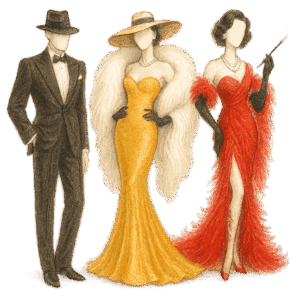
Hollywood is best used to describe the glamour style. It is all about making an impression. The focus is on being sexy, eye-catching, and dramatic. The glamour style exudes luxury, with sophisticated silhouettes and embellishments designed to reflect the light. Fur, pearls, and powder all contribute to creating an opulent appearance.
Edgy
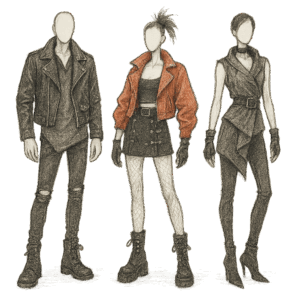
The edgy style is about being different. It can be provocative, featuring political statements or expressions of a unique personality. It often combines denim, leather, and shiny metals to create a raw and rebellious look. Dark tones, gloomy motifs, and worn-out fabrics are essential elements of the edgy style.
Goth
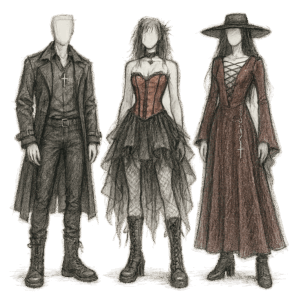
Goth is inspired by dark, gothic art and architecture. It is predominantly black and dramatic. Cosmetic expression plays a major role, with black or dark lipsticks and eyeliners, along with pale skin. Typical garments include combat boots, fishnet stockings, corsets, black dresses, and skirts.
Grunge
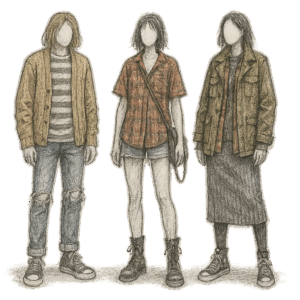
The grunge style draws inspiration from the 1980s and 90s focus on individuality and rebellion against capitalism. Flannels, jeans, messy hairstyles, and vintage clothing are characteristic of this style. An authentic look is prioritized over a polished and glamorous one. The style was especially popularized by Nirvana’s lead singer, Kurt Cobain.
Y2k
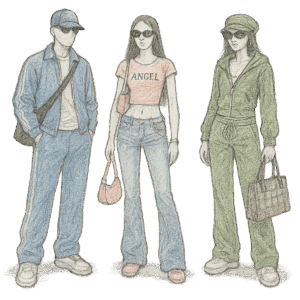
Y2K, or Year 2000, is inspired by the 1990s and early 2000s excitement for the new millennium. Futurism is mixed with retro, playing with metallic textures, plastic, shiny materials, and colors ranging from pastels to neon. Y2K was especially popularized by Paris Hilton and Britney Spears. Typical garments include baby tees, miniskirts, colorful tracksuits, low-rise pants, and oversized tinted sunglasses.
Punk
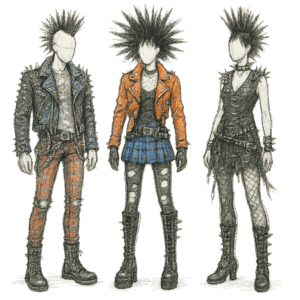
The punk style is intended to provoke the status quo, featuring raw, vulgar, harsh, and sexual elements. It is the most visible physical expression of rebellion. Mohawks, tattoos, piercings, and spikes often appear in punk style, along with clothing such as leather jackets, ripped jeans, and graphic T-shirts. Vivienne Westwood is credited for popularizing and bringing punk style to the catwalk.
Cyberpunk
Cyberpunk is inspired by a futuristic, dystopian world. It is a high-tech environment with skyscrapers, neon lights, and holograms — and fashion must keep up. Materials such as leather, nylon, PVC, and metals are used to create a high-tech appearance. The line between human and machine should be blurred. Typical garments include futuristic sunglasses, techwear, combat boots, and neon elements.