Japanese clothing
Japanese clothing reflects a respect for harmony, occasion, and social order. Through symbols and garment types, it offers insight into status and family. The clothing is typically loose-fitting, layered, folded, and pleated in various ways. It is generally aesthetically functional.
Men and women wear the same types of garments, but with visual differences. Men wear them in dark colors, while women wear more vibrant tones. Women decorate the outside, whereas men decorate the inside—typically with kamon (family crests).
bottoms
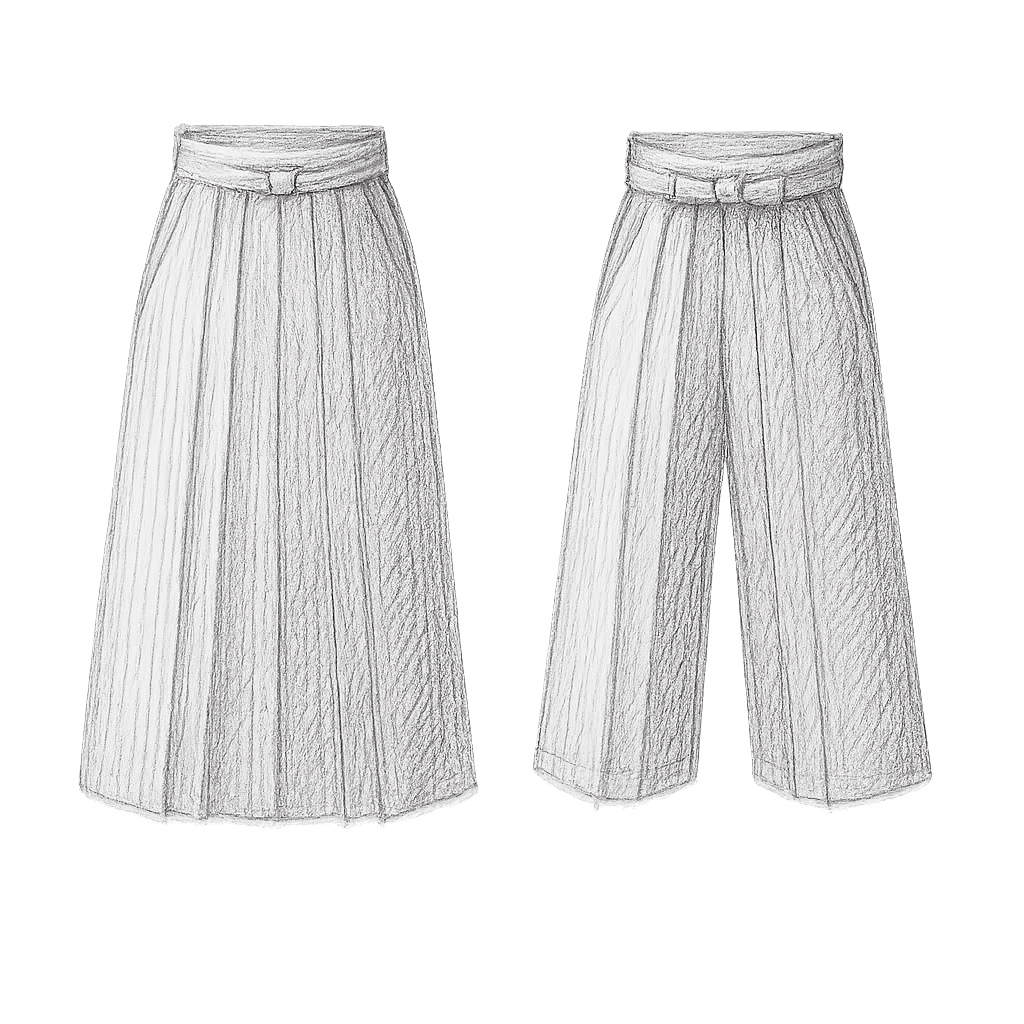
Hakama were traditionally worn by samurai to conceal their legs during combat. It is a wide-legged garment with seven pleats (folds in the fabric), symbolizing the seven virtues of bushidō (the samurai code of ethics): five in the front for courage, benevolence, justice, respect, and sincerity, and two in the back for loyalty and honor. It is tied at the waist with four straps—two in the front and two in the back.
A distinction is made between andon (lantern) hakama, which do not have separate legs and resemble a lantern or skirt, and umanori (horse-riding) hakama, which have individual pant legs.
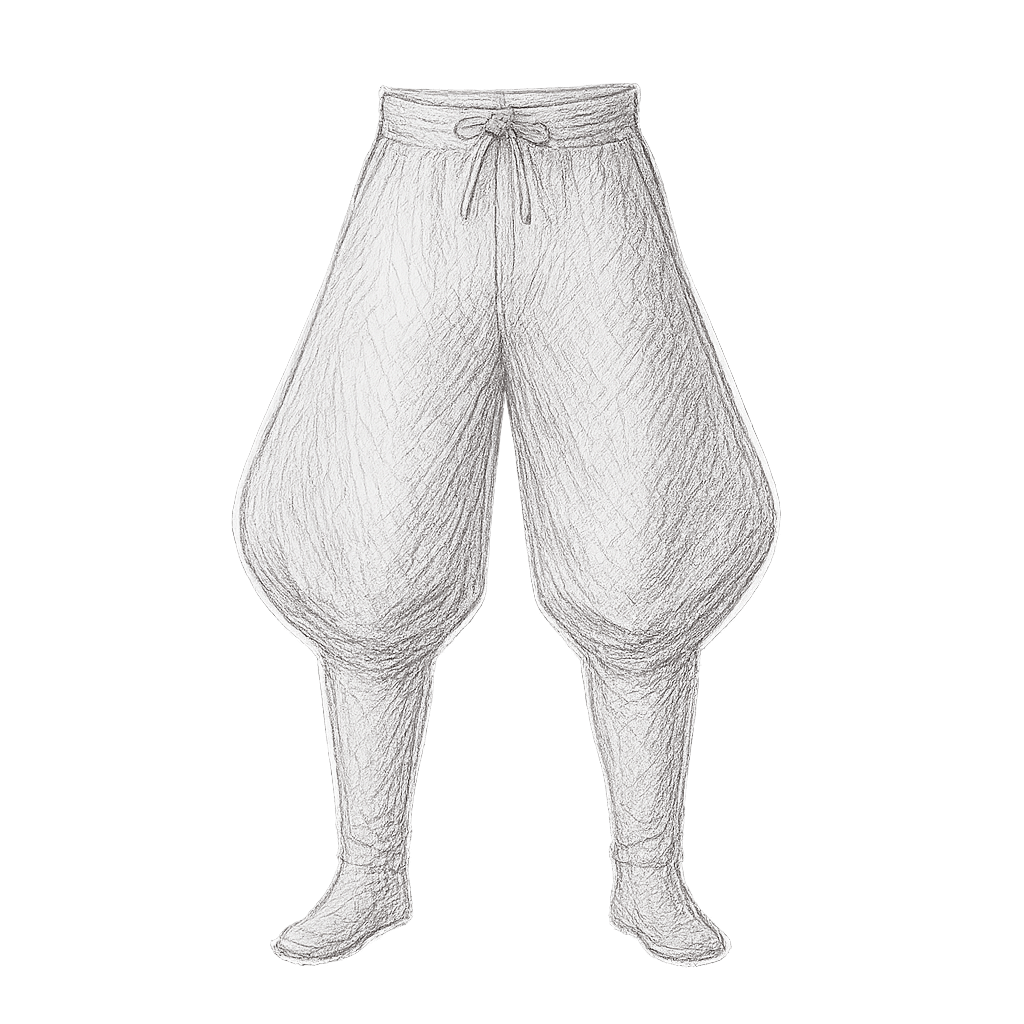
Tobi trousers are work pants worn by construction workers. “Tobi” means “to fly” in Japanese and refers both to the scaffold workers who wear them and to the mobility the trousers provide. They are recognized for their iconic silhouette. The trousers are tight at the top to stay secure, very wide in the middle to allow ventilation for the legs, and tight again around the ankles. This gives the pants a mushroom-like shape at the bottom and they are often tucked into the footwear.
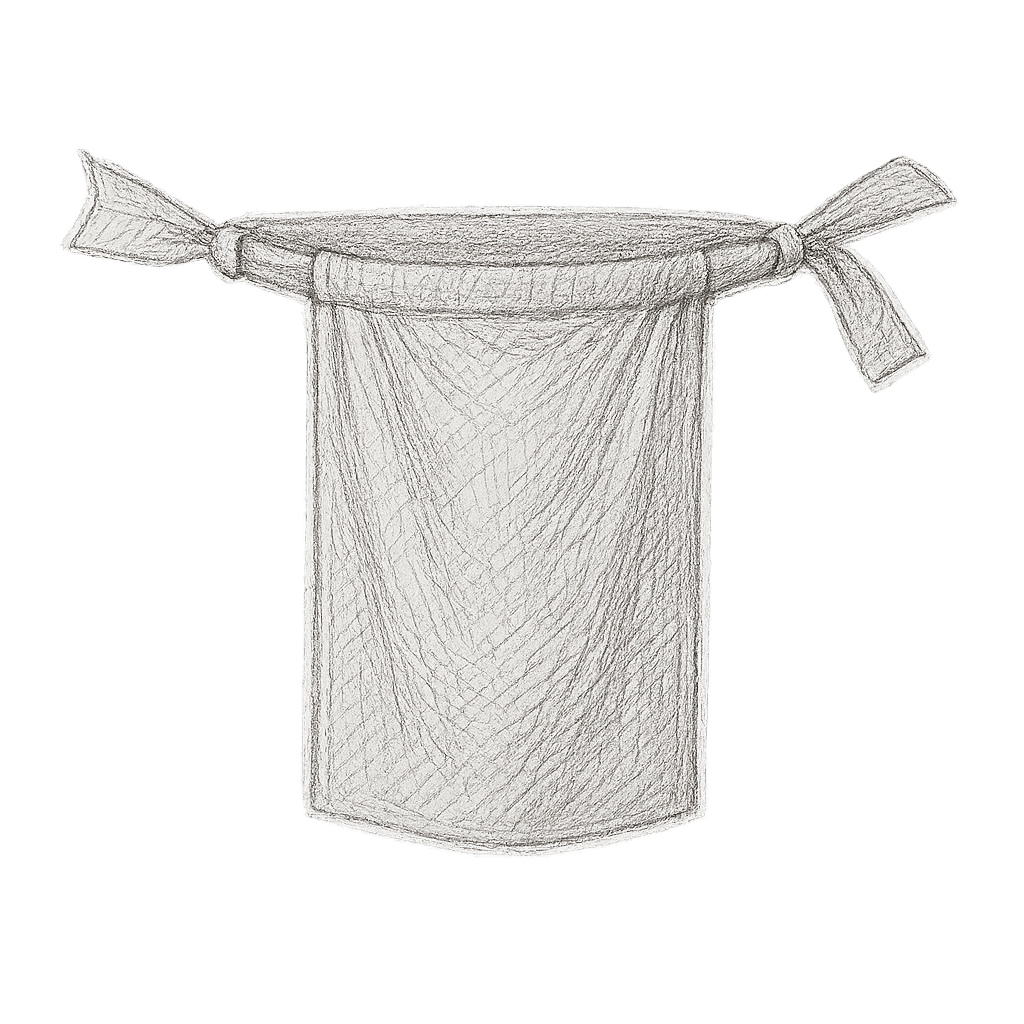
Fundoshi are traditional men’s underwear that were the standard in Japan before World War II. They consist of white cotton cloth wrapped around the hips and between the legs to protect the groin. They can resemble women’s underwear or the mawashi worn by sumo wrestlers.
tops
Kimono is a traditional Japanese robe. It is T-shaped, loose-fitting, ankle-length, and has large, wide sleeves. It is always wrapped left over right. Men typically pair the kimono with hakama and haori, while women wear it with vibrant colors, patterns, and kamon (family crests). Unmarried women wear the long-sleeved furisode kimono, while married women wear the tomesode, which has shorter sleeves.
The kimono is shaped around the body using sashes or belts. Koshihimo are thin cloth ties used to fasten the kimono. On top of these, a decorative obi belt is worn. The obi is usually wide with different illustrations, and tied in various styles.
The outermost layer of kimono clothing is called the nagagi. Underneath, two undergarments are worn: hadajuban and nagajuban. The nagajuban is worn directly under the kimono to provide protection. It is often neutral in color, has long sleeves, and remains partially visible. The innermost layer is the hadajuban, which protects the kimono from body fluids. It can be either a one-piece or a two-piece undergarment.
Yukata is a type of summer kimono, made from lighter materials than a regular kimono. It is worn directly on the body or over a hadajuban, typically after bathing or as sleepwear.
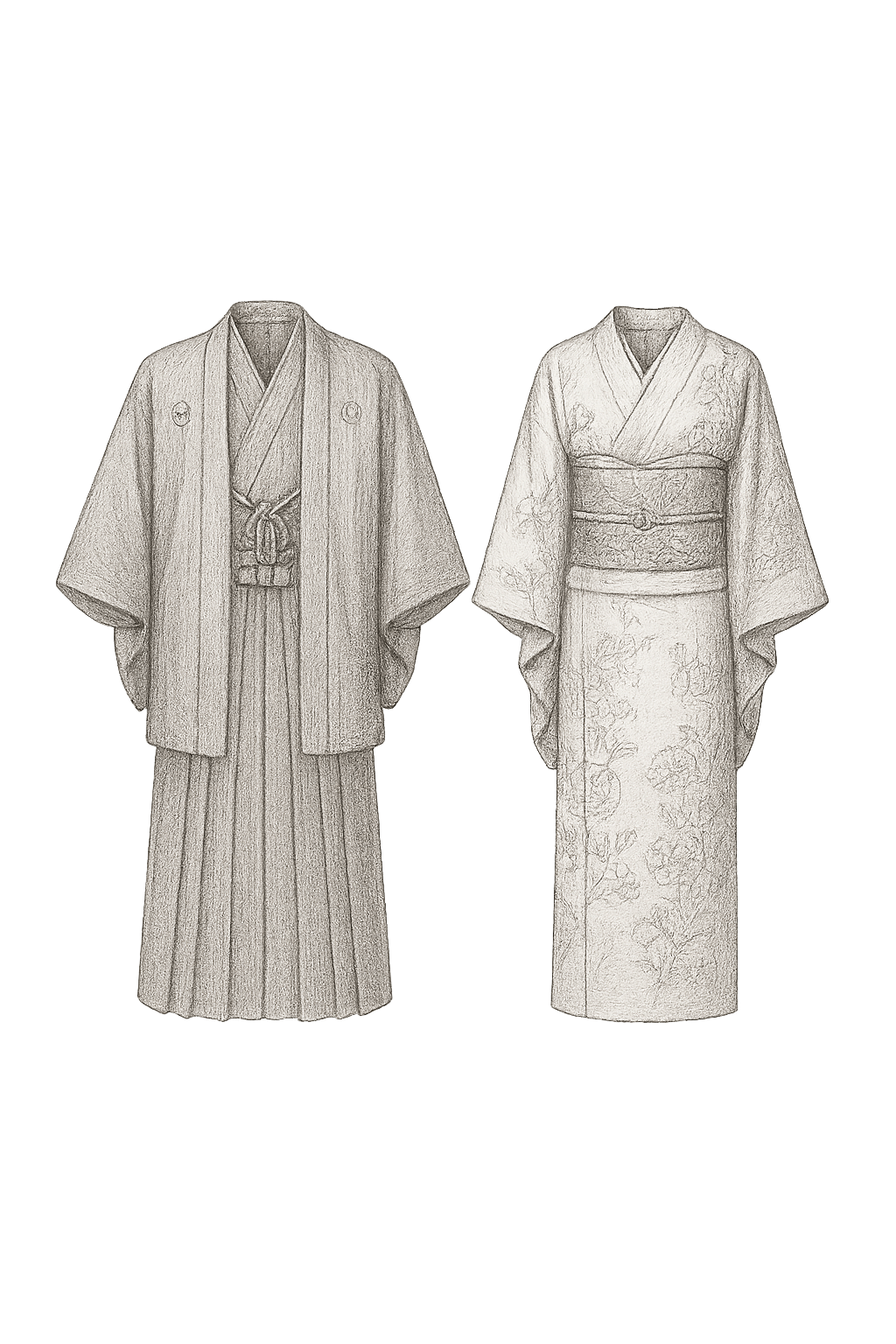
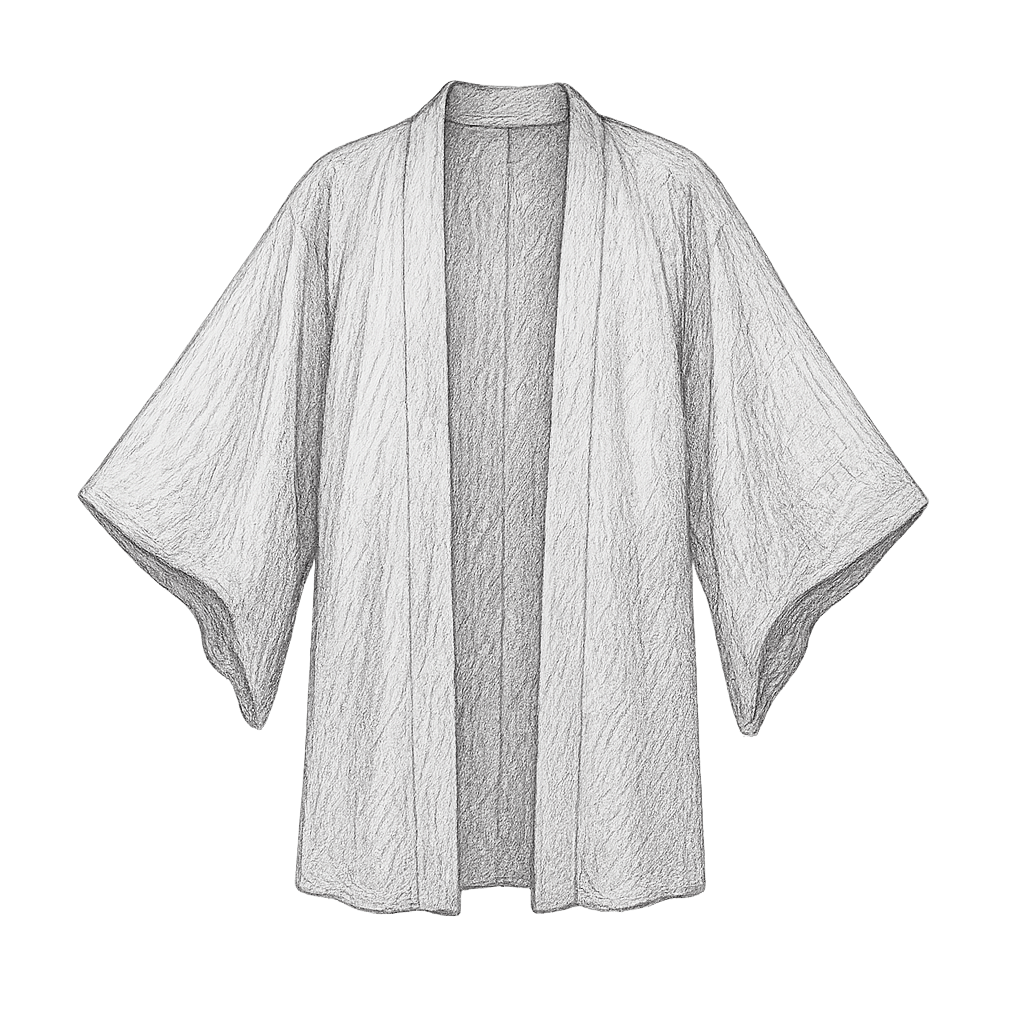
Haori is a Japanese overcoat worn over a kimono, typically as formal wear for men. Its construction is T-shaped like the kimono, with long, wide sleeves. However, it is shorter, reaching the hips or thighs. Men’s sleeves are sewn shut to the body, while women’s sleeves are open at the armpits. The haori is designed not to be fastened in the front but is held together with strings.
Sets
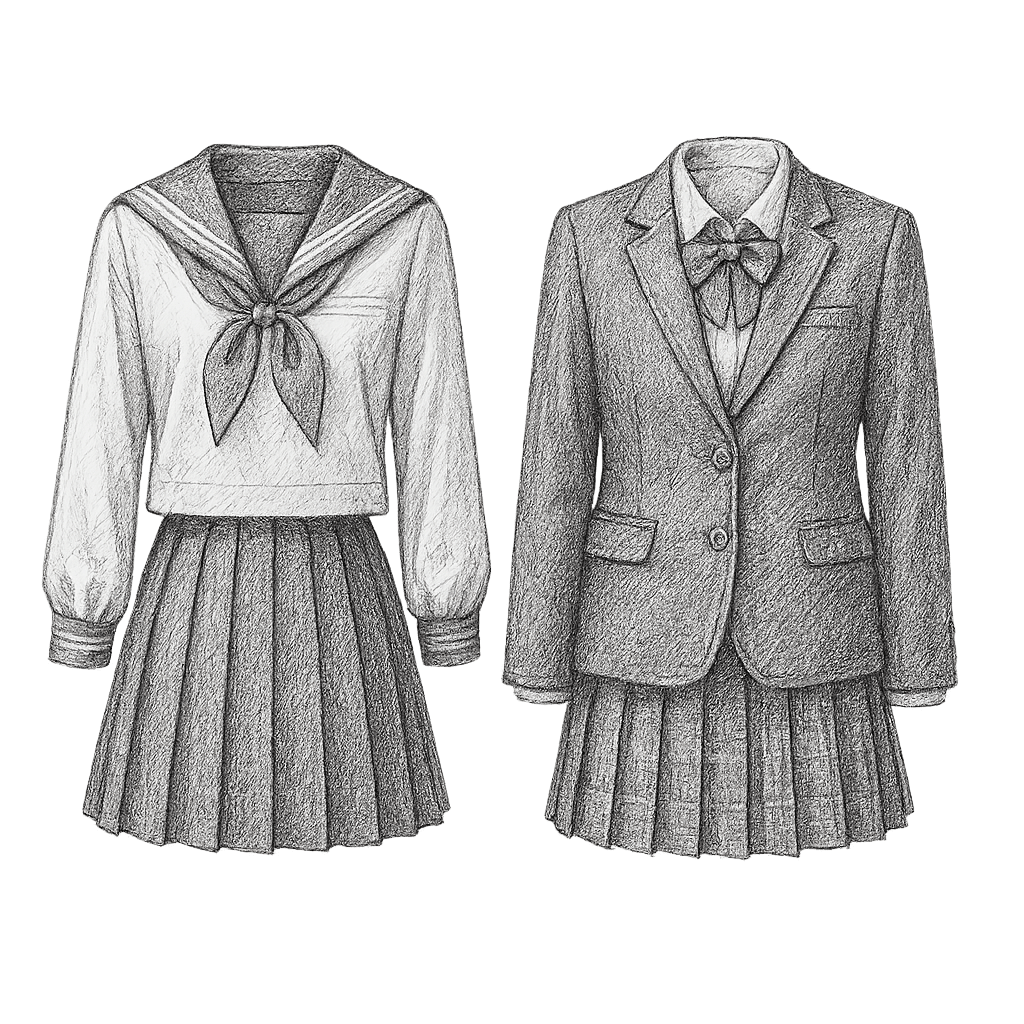
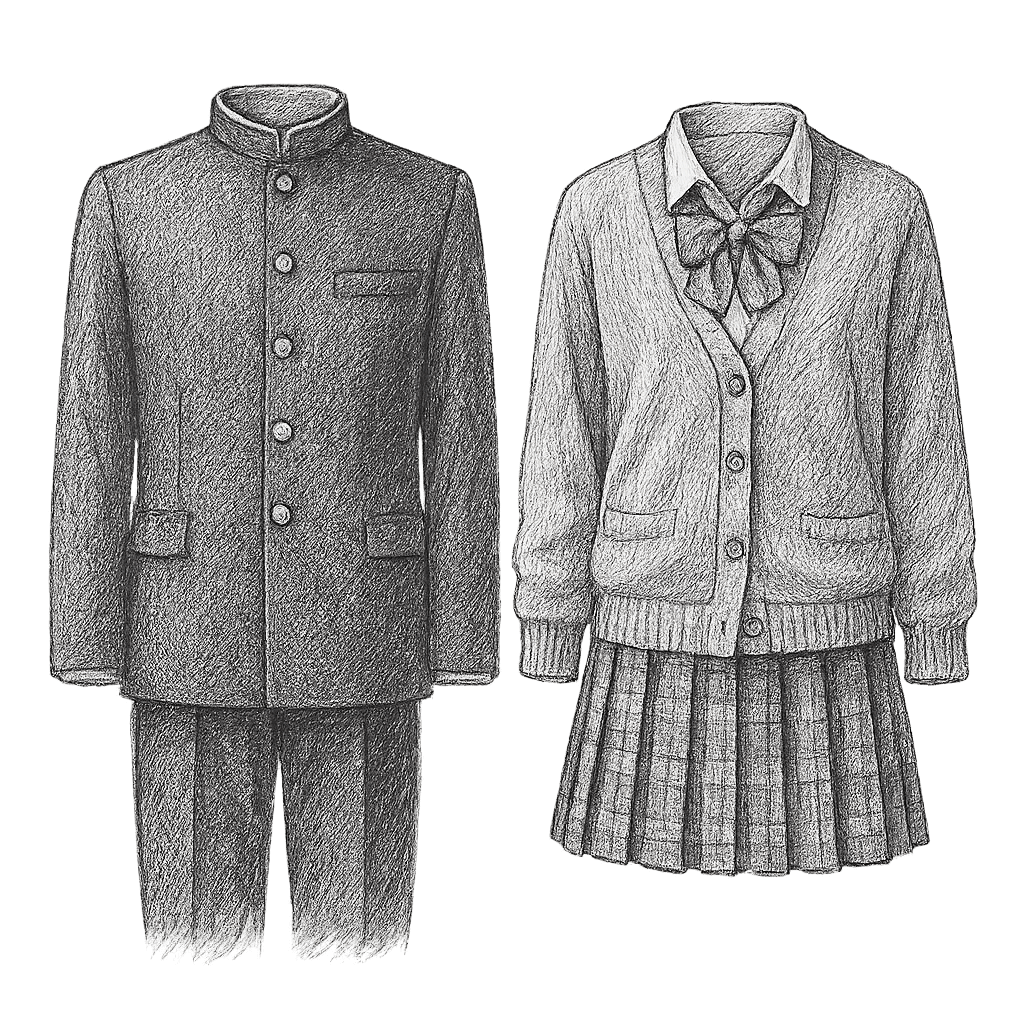
Seifuku means “uniform” and typically refers to Japanese school uniforms. The concept came from the West, inspired by military uniforms, to symbolize discipline and unity in schools. Inside the schools, the uniforms are paired with uwabaki shoes, which are indoor shoes.
- The sailor style is the most iconic seifuku style. It consists of a blouse with sailor stripes on the collar and sleeves, often combined with a bow or tie and a pleated skirt.
- The blazer style consists of a blazer and shirt with a tie or bow, paired with a pleated skirt or trousers.
- The gakuran style consists of a black or dark blue jacket with a high, standing collar and brass buttons, along with matching trousers.
- The kogal style features shorter pleated skirts, long, loose socks, cardigans, platform shoes, and colorful accessories.
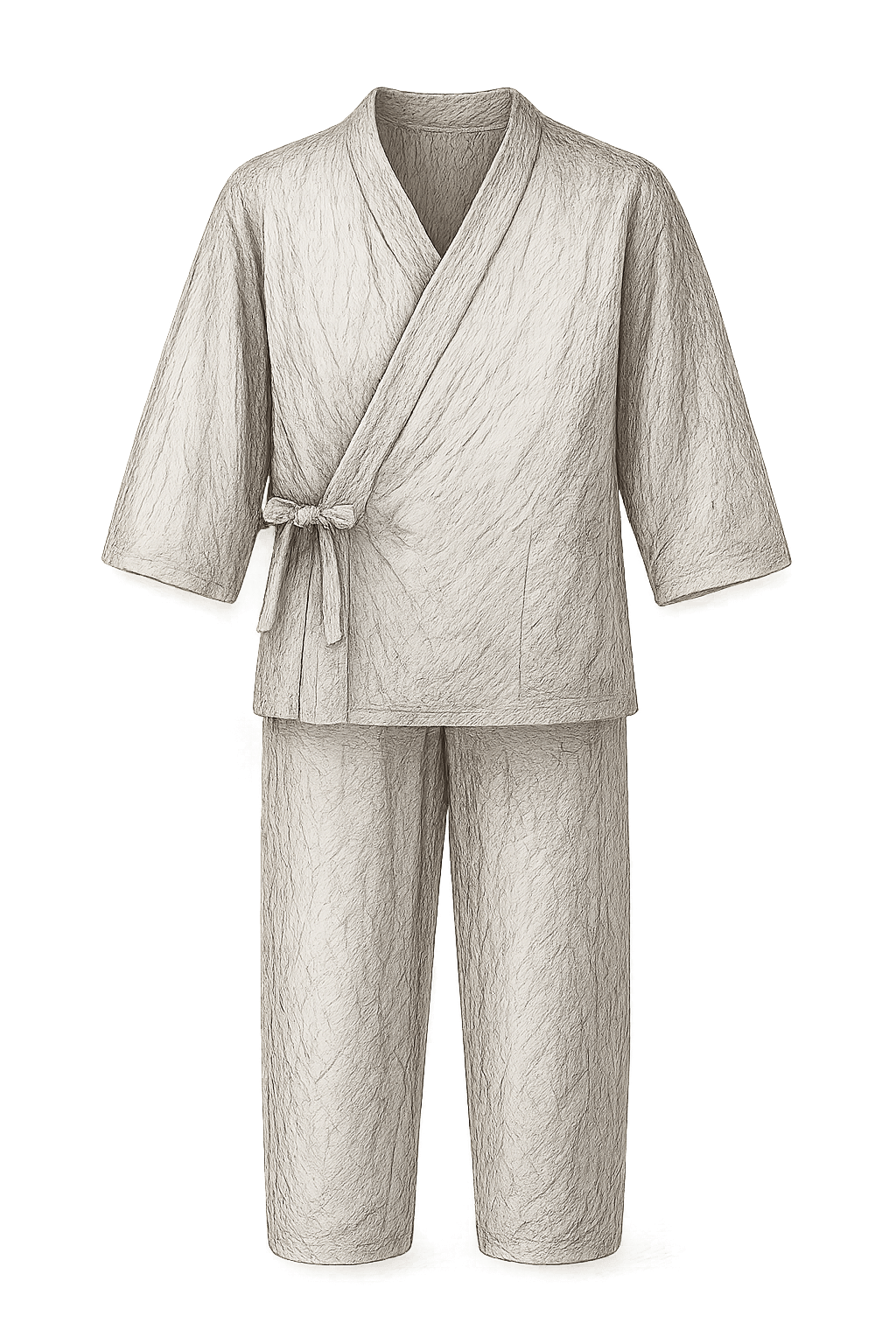
Jinbei is an informal summer outfit consisting of short pants and a top resembling a short kimono with short sleeves. The left side is tied over the right with ties. The seams are very loose to make the outfit breathable.
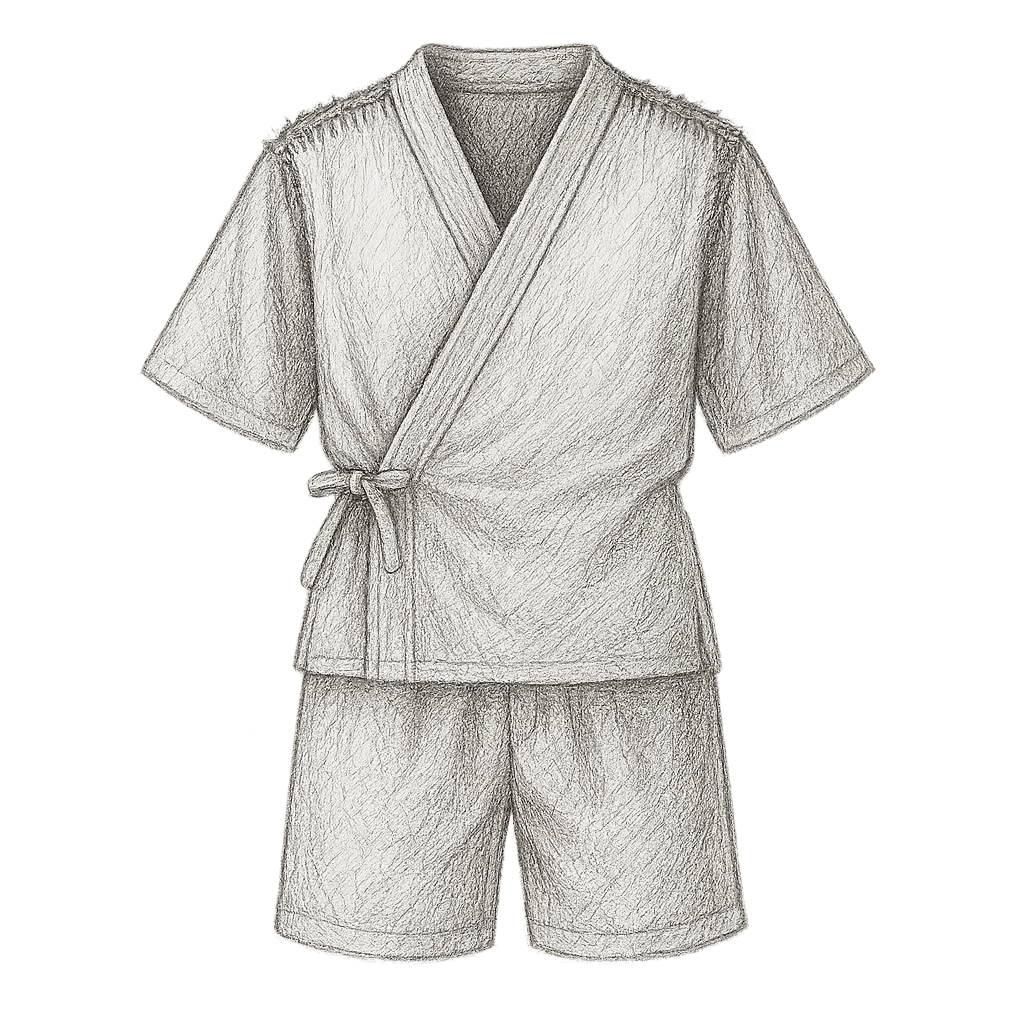
Samue is stylistically very similar to jinbei but features long sleeves, long pants, and sturdy seams. Samue is designed for cooler temperatures and can be lined for winter use.
Footwear
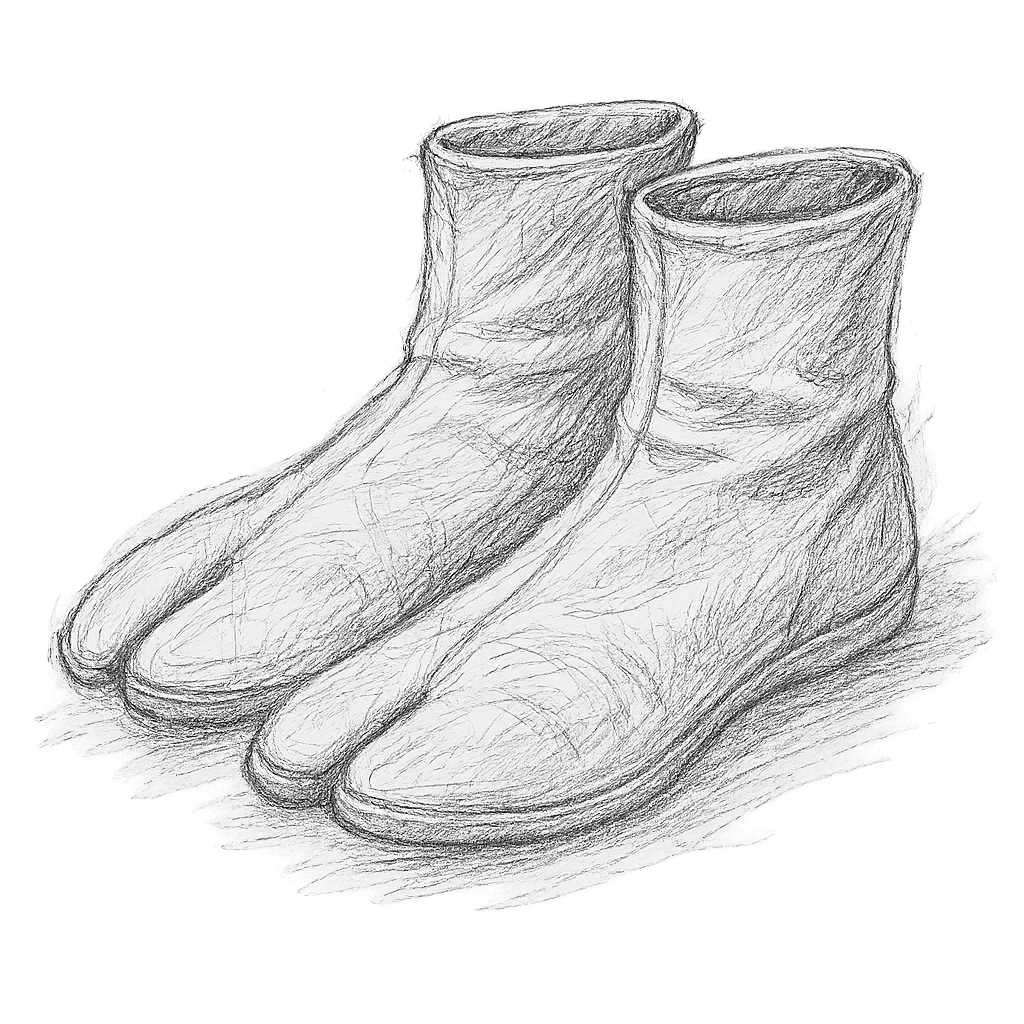
Tabi is a traditional Japanese footwear design used for both socks and shoes. Tabi are characterized by the separation of the big toe from the other toes, which allows them to be worn with geta and zori sandals. There are also jika-tabi, which function as shoes with rubber soles.
Zōri and geta are both types of traditional Japanese sandals, often worn with kimono and tabi socks.
Zōri are made from comfortable materials such as straw, fabric, or leather. They have a flat sole, sometimes with a slight heel.
Geta are made of wood and are elevated off the ground by two vertical wooden blocks that resemble teeth. This construction creates a clacking sound when walking and makes them somewhat unstable.

Hats
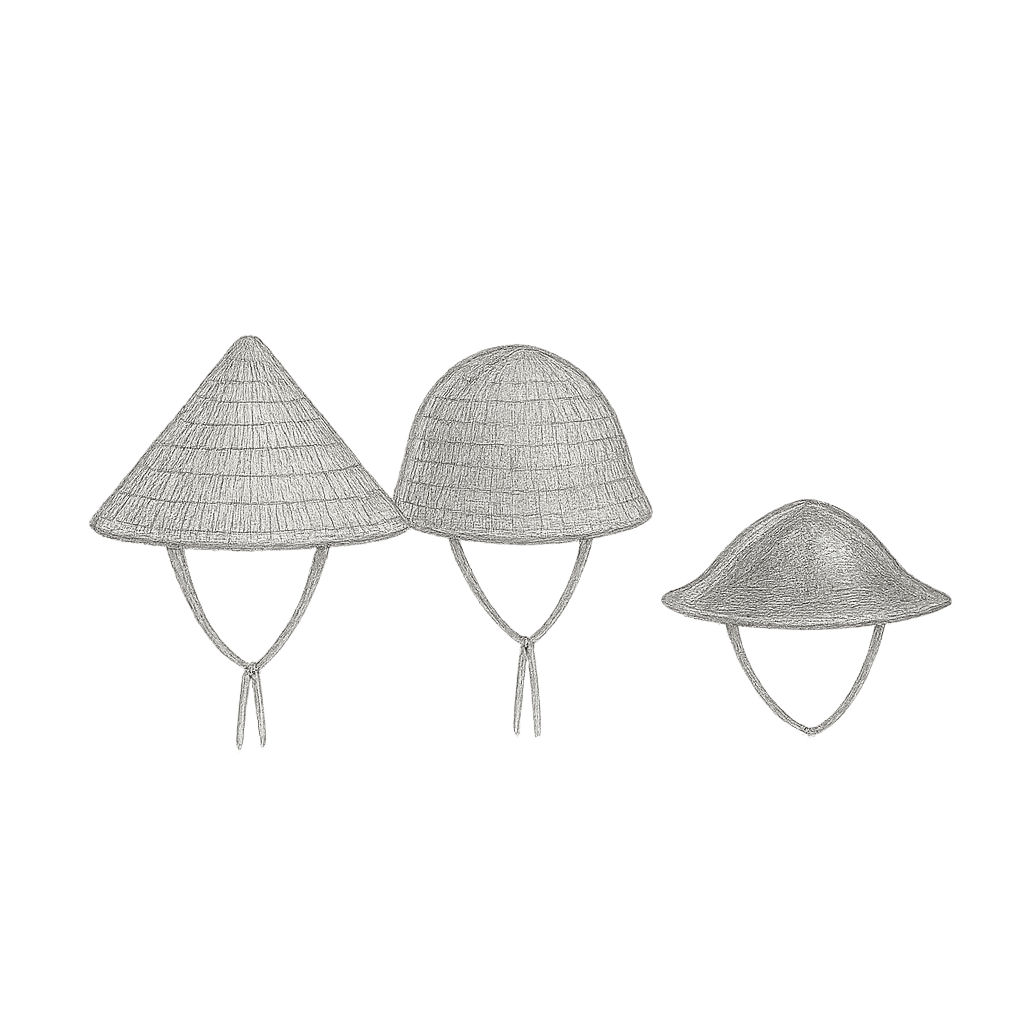
Kasa is a collective term for a variety of traditional Japanese hats. They are round, conical in shape, and have wide brims that offer protection from different weather conditions. They are fastened under the chin with a string. There are several types of kasa, made from different materials:
Sugegasa is made from reeds.
Amigasa is woven from bamboo.
Takuhatsugasa is shaped like a large basket that covers the entire head.
Jingasa was worn by samurai. Made of wood, leather, metal, or bamboo, it served as a lightweight war helmet.
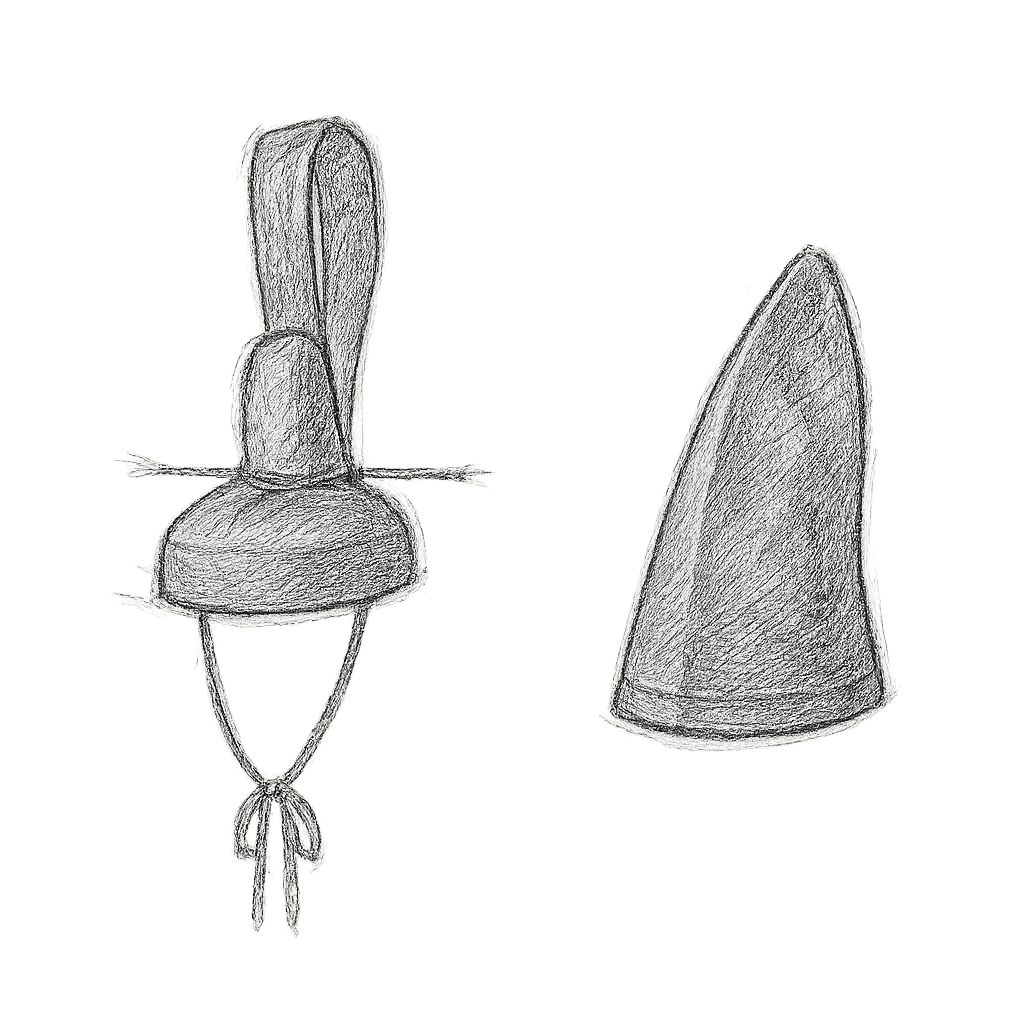
Kanmuri and eboshi are traditional headpieces worn by aristocrats in Japan. Today, they are used for special ceremonies. Both are made from black, lacquered fabrics such as silk and are secured to the head with strings.
Kanmuri consists of three parts: a cap-like base, a koji, which is the upright part of the hat and serves as the foundation for the third part, the ei — a tail-like fabric piece that hangs down the back.
Eboshi is made of a single piece and is either upright or folded, depending on the type and the wearer’s rank. It typically resembles a black tea cozy.